
After many years of doing medical malpractice work, I am not usually surprised by anything, but this story took me aback. A thirteen-year-old girl underwent surgery to replace a faulty heart valve at a major hospital in Oregon. After completing the valve replacement, the surgeons were unable to return her heart to normal sinus rhythm and she had to be placed on a heart pump to keep her alive.
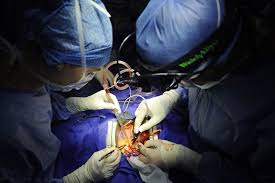
The heart pump was at best a temporary solution. The young girl could not live long on such a machine and would likely not want to. The surgeons told the parents that their daughter’s heart would not restart due to the shock of the surgery. Her only options were an artificial heart or a heart transplant. Her condition deteriorated and a palliative care team at the hospital approached the parents to discuss end-of-life issues. They also inquired whether the parents would be willing to donate their daughter’s organs following her death.
Unwilling to give up on their daughter, the parents had her transferred to a children’s hospital in Seattle where the doctors made a shocking discovery. The Oregon surgeons had installed the replacement heart valve upside down. It is unclear whether the Oregon surgeons realized their mistake and covered it up or, more likely, never tumbled to their error. In any event, the Seattle surgeons took the teen to surgery, removed the upside down valve and replaced it with one that was properly positioned. After being taken off cardiac bypass, the young girl’s heart began to beat on its own and she was ultimately able to be sent home.
There are some important lessons to be learned from this near tragedy. First and foremost is the fact that even skilled surgeons and health care providers can and do make mistakes that kill and injure patients. This case involved well-trained and experienced surgeons at a well-respected hospital in a major American city. If a tragic error can occur in this setting, it can occur anywhere.
Another lesson is that medical errors often go undetected and unreported. Sometimes, in spite of the best of care, a patient experiences a bad outcome. But bad outcomes are not always just bad luck. Sometimes, and perhaps many times, they are the result of a medical mistake that no one recognizes or is willing to reveal. Had the young girl died in the Oregon hospital, no one would ever have realized that she died of a medical mistake. There likely would have been no autopsy and the death would have been attributed to natural causes following surgery. Her parents would have been none the wiser.
Another lesson is one that comes to us from former President Ronald Reagan. In discussing his negotiations with the Soviet Union, he famously said, “Trust, but verify.” Just because a doctor says something does not make it true.
The bottom line takeaway here is that, if you or a loved one get a significantly bad result following medical treatment, it may be just that: a bad result that is no one’s fault. On the other hand, it may be the result of an avoidable medical mistake that no one wants to talk about. The only way to know which is to have someone experienced in medical malpractice investigate this for you. The investigation will be free and you owe it to yourself to at least ask whether what happened was bad luck or bad care.



