

In so many ways our bodies are wondrous machines that work nearly flawlessly for decades before they finally wear out or something goes wrong. Over millions of years, the process of evolution tried out various strategies and discarded the ones that didn’t work well. When something new and better came along, it was incorporated into our genes. The process worked well until civilization changed the environment so quickly our bodies could not keep up. The process of blood clot formation is an excellent example.
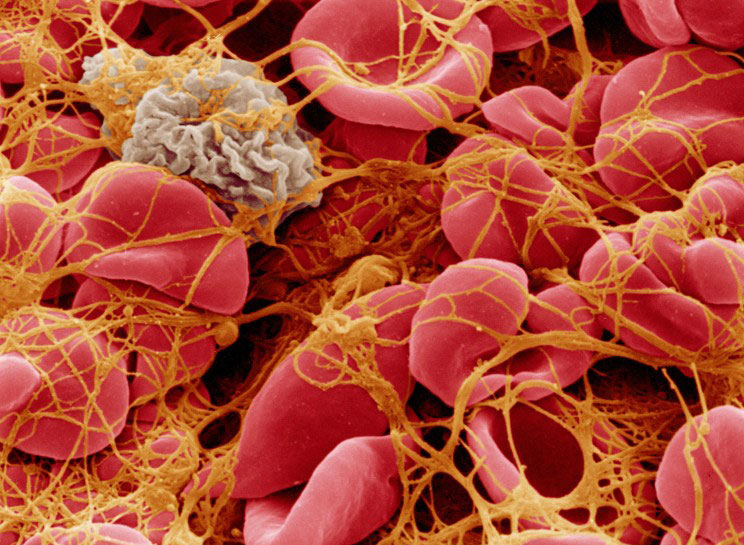
If our blood did not clot, we would die. Some people have a disease which prevents normal clotting. It is called hemophilia and, in the absence of treatment, hemophiliacs have short life expectancies. In the 1960’s, a hemophiliac could expect to live only until age 11. So blood clotting is a good thing, at least until it is not.
Our distant ancestors were not couch potatoes. In the first place, there were no couches. In the second, anyone who sat around all day starved to death. It was a struggle to find food and that struggle necessitated constant or near constant movement. Movement keeps the blood in our bodies flowing and keeps it from clotting. Our blood was meant to circulate inside a moving body. When we park our bodies in front of a television or on a long distance flight across the ocean, our blood flow slows down and clots may form. Obesity also slows down our bodies and increases the risk of clot formation. So do lots of other things we encounter in modern life.
Here is a list of some things that increase the risk of clot formation:
- Surgery
- Hospitalization
- Cancer
- Some cancer treatments
- Pregnancy
- Use of estrogen-containing contraceptives
- Hormone replacement therapy
- Old age
- Long distance travel
- Varicose veins
- Catheter placement in a vein
- History of blood clots
- Obesity
- Smoking
- Trauma
- Autoimmune disorders
Some of these risk factors we can and should avoid, such as smoking. Others are justd part of modern life and must be managed and should keep us on alert for clot formation.
Although clots can form almost anywhere, the most common place in the body for the formation of dangerous clots is the deep veins of the legs. When this occurs, it is called Deep Vein Thrombosis (DVT). DVT may be silent. There may be no symptoms. If there are symptoms, they usually involve pain in the calf, and perhaps redness, swelling and a feeling of warmth. If you develop these symptoms, especially if you have any of the risk factors listed above, seek medical treatment.
DVT can be fatal, not in and of itself, but because of what can happen, if the blood clot breaks free of the deep vein and travels through the heart to the lungs. When the oxygen-depleted blood returns to the heart, it is sent on by the right ventricle into the lungs to take on a fresh load of oxygen. In order to reach the small chambers where the oxygen transfer takes place, the blood has to travel through ever smaller vessels in the lung. If the blood is carrying a piece of clot that broke off from the calf, it will get stopped and clog up the vessel when the vessel gets too small for it to pass. When that happens, no more blood can flow past that point. The larger the piece of clot, the sooner it will get caught and the greater the amount of lung that can no longer transfer oxygen to the body. A blood clot which reaches the lungs is called a pulmonary embolism.
Sometimes the piece of clot that breaks off is so large that it blocks the very top of the lungs where the depleted blood is diverted into either the left lung or the right. A clot this large is called a saddle embolus and if it blocks all or most of the flow of blood into the lungs, it is usually almost immediately fatal.
At the other end of the spectrum is what is called an embolic shower. This is a shower of very small clots, If they do not interfere very much with the flow of blood into the lungs, they will not cause much in the way of symptoms and will be dissolved by the body. The clots can be anywhere from the large, fatal, saddle embolus to the very tiny. The larger they are, the more symptoms they will cause and the more likely they are to lead to death or disability.
When the clots reach the lungs, most people will feel some symptoms. Here are some of the symptoms of pulmonary embolism.
- Sudden shortness of breath
- Chest pain
- Feeling of anxiety
- Irregular heartbeat
- Dizziness, fainting or lightheadedness
- Heart palpitations
- Sweating
If you develop chest pain or shortness of breath, seek immediate medical attention. The other symptoms are less specific and could be many things but should be monitored.
Pulmonary embolism is not always an easy diagnosis to make. I have handled a number of fatal pulmonary embolism cases over the years. They each involved our old friend misdiagnosis. In each case, the health care provider thought she was looking at a cold, a pneumonia, non-cardiac chest pain or some other condition not likely to be fatal. In each case, she was mistaken. The best thing you can do is avoid those risk factors you can avoid and be alert to the development of DVT and pulmonary embolism. Give the doctors all the time you can by not waiting until things get bad before seeking help.



