
The nation’s largest physician specialty group, The American College of Physicians (ACP), is concerned about the trends in Medicare Advantage plans and the damaging effect these trends are having on patient care. It wants the Centers for Medicare and Medicaid Services (CMS), the entity that oversees both Medicare and Medicare Advantage plans, to make some changes.
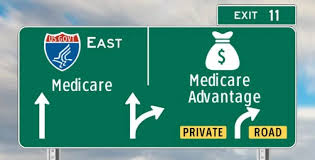
54% of all Medicare beneficiaries are now enrolled in Medicare Advantage (MA) plans. That is a lot of beneficiaries and, as a result, the actions of the companies running these plans have an enormous impact on the delivery of health care to a large swath of the population of the United States. The doctors think that impact is negative in many respects. They stated their concerns and suggested policy reforms in a position paper recently published in the Annals of Internal Medicine.
Among the concerns of the ACP is the practice of MA plans to downcode physician’s bills. To ensure standardization of billing, the medical system uses billing codes. By downcoding, MA plans reduce the complexity of the doctor’s care and thereby also reduce the doctor’s bill to the MA plan.
By contrast, MA plans often “upcode” the condition of their beneficiaries to the detriment of the taxpayers. MA was created and presented as an alternative to traditional Medicare that would be more efficient and cheaper for the taxpayers than traditional Medicare. The MA plans receive a fixed amount per year for each of their participants. If the participant does not need much care that year, the plan gets to keep whatever it did not spend. If the participant needs a lot of care, the plan may lose money on that participant. However, in order to make things fair and to assure MA plans do not discriminate against the sicker participants, MA plans receive a larger annual fee to care for participants who are sicker. Unfortunately, this has led to the plans “upcoding” their participants, which means that it tells CMS that they are sicker than they really are in order to get a larger annual fee. For example, some participants have been diagnosed with cataracts years after having their cataracts removed. Cataracts cannot return after removal of the natural lens of the eye. Other participants have similarly been reported to have non-existent medical conditions that cannot be possible or are exaggerated. According to the ACP, CMS paid the plans $84 billion more than it would have cost if the same participants received their care through traditional Medicare. These extra costs are paid, at least in part, by the the Medicare premiums of those enrolled in traditional Medicare.
Although MA plan participants are offered a chance each year to return to traditional Medicare, there is a practical obstacle which prevents many from doing so. Most people on traditional Medicare purchase gap coverage to pay the 20% of their bills that Medicare won’t pay. If someone is trying to leave an MA plan and return to traditional Medicare, the companies offering the gap coverage can refuse to cover pre-existing conditions or charge extra for this coverage. The ACP recommends MA plans be required to offer gap coverage without pre-existing condition limitations or higher premiums. This would allow MA participants a true opportunity to switch to traditional Medicare, if they wish to.
Other concerns include the practice of requiring prior approval for procedures and for referral to a specialist, requiring participants to use a limited roster of doctors, and requiring participating doctors to sign non-compete agreements, which prevent patients from following their doctor, if he or she leaves the MA plan.
There are also problems with the confusing and often misleading advertising used by the MA plans to induce seniors to sign up with them. Seniors complain that they find the coverages offered by the plans to be hard to understand and to result in more expenses to them than they were led to believe they would have to pay.
MA plans have a place but they should be required to play fair with both their participants and the CMS, which represents we taxpayers. They cannot be allowed to become so large that they threaten traditional Medicare, reduce patient choice and the access to good medical care.



