
Doctors are only human and so perhaps we should not expect them to act in the lofty way they tell us they are going to act. Perhaps we should expect them to be looking out for themselves as most of the rest of us do and not putting their patients’ well-being before their own. I just wish they wouldn’t put so much effort into telling us how noble they are and how patients always come first.
Doctors are well-respected members of society, and with good reason. They have spent a lot of time getting a medical education. They take care of us and of our families when we are sick or get injured. They are usually compassionate and skilled at what they do. We can usually count on them to act ethically and honestly.
As a result of their role as healers and respected members of society, doctors are usually well-compensated. They are given special privileges that most of the rest of us are not. They are given a respected title. They are treated deferentially. Their statements are almost always accepted as true. And, importantly, when it comes to questions about the care they provide, they are given the benefit of the doubt. If you are going to sue a doctor and claim that the care she or he provided was below the accepted standard of care, you had better have a pretty strong case. Juries, comprised of people like you and me, don’t want to believe that doctors make mistakes that kill and seriously injure people. A patient had better come prepared with strong proof, if he expects to persuade a jury that a doctor committed malpractice.
The special treatment doctors routinely receive is not enough for them when they injure someone as the result of an avoidable medical mistake. It is not enough that juries don’t want to believe doctors make serious mistakes and give them the benefit of the doubt. They want to stack the deck even further in their favor. They ask for and receive special treatment from the legislature. They ask for and receive special laws that make it even less likely that a patient whom they injure as the result of an avoidable medical mistake can ever receive the compensation she or he deserves. Rules that apply when you or I cause an accident on the freeway don’t apply when the defendant is a doctor being sued for malpractice.
You would think that with all the deference doctors receive and all the special treatment they ask for and receive, they would at least adhere to their code of ethics and be honest with their patients. You might think that, but you would be wrong.
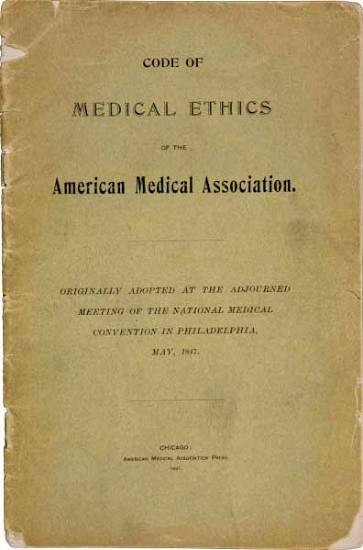
The Code of Ethics promulgated by the American Medical Association correctly states that the physician/patient relationship is one based on trust. The patient should be able to count on the doctor to be honest and truthful with them. The Code requires the physician to “place patients’ welfare above the physician’s own self-interest or obligations to others . . . .” This is where doctors typically fail their patients when there has been a medical error.
When there has been a medical error, especially if it is one which has caused serious injury or death, the cone of silence descends. Doctors rarely admit to their patients that they made a mistake that caused serious injury or death to a loved one. Those few that do deserve our admiration. The rest of them, who either dissemble or simply remain silent, are looking out for themselves. They are putting themselves and their well-being ahead of that of the patient whom they injured.
Admitting a serious medical error can get a doctor in trouble with the hospital at which the error occurred. The doctor may lose his or her privilege to practice in the hospital. Admitting a serious medical error may get a doctor in trouble with the state medical board, which can impose sanctions on the doctor up to and including loss of the license to practice medicine. Admitting a serious medical error will increase the chance of being sued and will often make it more expensive to buy malpractice insurance in the future. Admitting a serious medical error will usually be personally embarrassing for the doctor before her or his peers. In short, the natural human tendency is to avoid these problems and make no admissions to the patient, even when the doctor knows that he has made a serious error and that the patient should be compensated for the injury.
The breach of medical ethics does not usually end there, of course. If the patient somehow manages to figure out that they were the victim of malpractice and makes a claim, that claim will be fought tooth and nail by the doctor and his insurance company. Because of all the advantages built into the system, doctors typically win 85% of the malpractice suits that go to trial. Tough luck for the patients injured by malpractice.
As I stated at the outset, it is not surprising that most doctors look out for themselves when the chips are down. Given the facts, however, could they not spend just a little less time and effort patting themselves on the back and telling us how wonderful they are?



