
We are trapped in bodies that were engineered by nature for the world as it existed over 100,000 years ago. Our bodies are changing to match their new environment, but no creature can change fast enough to match the rate at which technology is altering our lives.
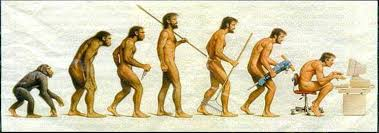
Our world is always changing. Ice ages come and go. Jungles turn into deserts and back to jungles again. Oceans appear and disappear. Mountain ranges rise and are washed away. The creatures on our earth are always struggling to adapt to these changes. Every once in a while a genetic mutation appears in a creature. If it is a dangerous mutation, the creature with the mutation dies and it is not passed on. However, if it is a beneficial mutation which makes the creature more successful at survival than its neighbor, the genetic trait will be passed down to its descendants. As you can imagine, this is not a quick process.
Right now our bodies are well-adapted for the world as it was 100,000 years ago when our ancestors were hunter gatherers. We can walk upright. We ditched the fur and cool our bodies with sweat. We can run long distances and chase down game animals that cannot sweat and will overheat if they run too far. We can live on relatively small amounts of food, if we have to. Unfortunately, the world for which we are adapted has changed, especially in the last couple of hundred years.
The Industrial Revolution changed everything. No longer do we need to farm or hunt or gather food to feed ourselves and our families. Now many of us we feed our families by working in offices and purchasing food at the store. We don’t run everywhere any longer. We ride in cars, or buses, or trains. When we go home, we eat processed foods and then sit in front of the television for hours. We get fat and weak.
Many of the diseases and health problems we have today are the result of the mismatch between what our bodies evolved to do and what we are asking them to do now. Our obesity epidemic is a classic example. A hundred thousand years ago, our ancestors never knew where their next meal was coming from or for how long they would have to go until that next meal. Those humans whose bodies were most efficient, who could get by on small amounts of food and who could turn any excess food into energy-storing fat, were the ones most likely to survive. The gene that helped our ancestors survive until their next meal is the same one that today packs on the pounds and stubbornly keeps them on whenever we eat a calorie-rich meal.
Cardiovascular disease is another good example. When we don’t use the machinery of our bodies to keep moving, when we become sedentary, the machinery breaks down. The heart is a muscle that needs to be kept active to do its best work. When we sit, the heart has little to do and gets weak. When we sit, we gain weight, which puts additional strain on the heart. Sedentary lifestyles also increase the amount of plaque in our arteries, which leads to coronary blockages, heart attacks and strokes. When we are sedentary, our blood pressure tends to rise over time, also leading to stroke and other illnesses.
If we as a species last long enough and the environment stabilizes, our bodies will eventually evolve to match our environment. I have no idea what that will look like but it will certainly be a different body than we have today. In the meantime, the more we can do to give our bodies the environment they were built for and need, the healthier, and probably happier, we will be. That means a diet rich in unprocessed foods and an active lifestyle.
Your mother was right all along. “Eat your vegetables.” “Turn off the TV and go outside and play with your friends.” “Don’t let me catch you with a cigarette.” Your body will thank you.


